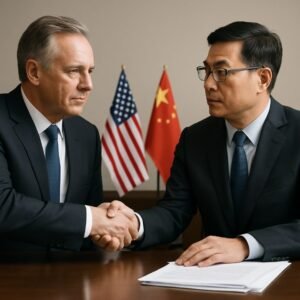
US-China Trade Relations: Navigating a Complex Landscape of Negotiations and Global Impact
The evolving dynamics of US-China trade relations remain a focal point for global economic and geopolitical discourse. Recent developments in negotiations and agreements between the two economic powerhouses have drawn attention to the intricate balance of cooperation and competition that defines their interaction. Understanding these shifts is essential for grasping the broader implications for international markets and key industries worldwide.
Recent Developments in US-China Trade Negotiations
Trade discussions between the United States and China have experienced a series of phases marked by both progress and setbacks. While specific details of the latest agreements or negotiation rounds are not broadly disclosed, the ongoing dialogue reflects a mutual recognition of the importance of stable trade relations. Efforts to address tariffs, intellectual property rights, technology transfer, and market access continue to be central themes in these talks.
Both nations have shown a cautious approach, aiming to manage economic tensions without escalating into more severe trade conflicts. This approach underscores a pragmatic understanding of the interconnectedness of their economies and the potential risks of prolonged disputes.
Economic Impacts on Global Markets and Industries
The state of US-China trade relations significantly influences global markets, given the scale of their economic activities. Stability in trade negotiations tends to foster confidence among international investors and businesses, encouraging cross-border investment and supply chain integration.
Key industries such as technology, manufacturing, agriculture, and energy are particularly sensitive to changes in trade policies between the two countries. For instance, technology firms on both sides are affected by regulatory measures and access restrictions, which can alter competitive dynamics and innovation trajectories. Similarly, manufacturing sectors depend heavily on supply chain continuity, which can be disrupted by tariffs or export controls.
In the agricultural sector, trade relations impact commodity prices and market access, influencing farmers and food supply chains globally. Energy markets also respond to shifts in demand and trade flows resulting from US-China economic interactions.
Geopolitical Considerations and Strategic Implications
Beyond economics, US-China trade relations are deeply intertwined with geopolitical strategies. Trade agreements and negotiations often reflect broader strategic objectives, including technological leadership, national security, and regional influence.
These interactions can either mitigate or exacerbate geopolitical tensions, depending on their outcomes. Constructive trade engagement has the potential to build channels for dialogue and cooperation in other areas, while unresolved disputes may contribute to broader strategic rivalry.
Perspectives from Business Leaders and Policy Experts
Business leaders generally emphasize the importance of predictability and transparency in trade policies to facilitate planning and investment decisions. They recognize the challenges posed by regulatory uncertainties but also see opportunities in market access and collaboration that stable relations can provide.
Policy experts highlight the complexity of balancing economic interests with national security concerns. They often advocate for a measured approach that safeguards critical technologies and supply chains while avoiding unnecessary escalation. Both groups acknowledge that the path forward requires nuanced diplomacy and a willingness to engage on multiple fronts.
Challenges and Opportunities Ahead
The future of US-China trade relations is shaped by a range of factors, including domestic political considerations, global economic trends, and technological advancements. Challenges such as addressing structural trade imbalances, protecting intellectual property, and managing strategic competition remain significant.
At the same time, opportunities exist to deepen cooperation in areas like climate change, health, and sustainable development, where shared interests can transcend economic rivalry. The ability of both nations to navigate these complexities will have profound implications not only for their bilateral relationship but also for the broader global economic order.